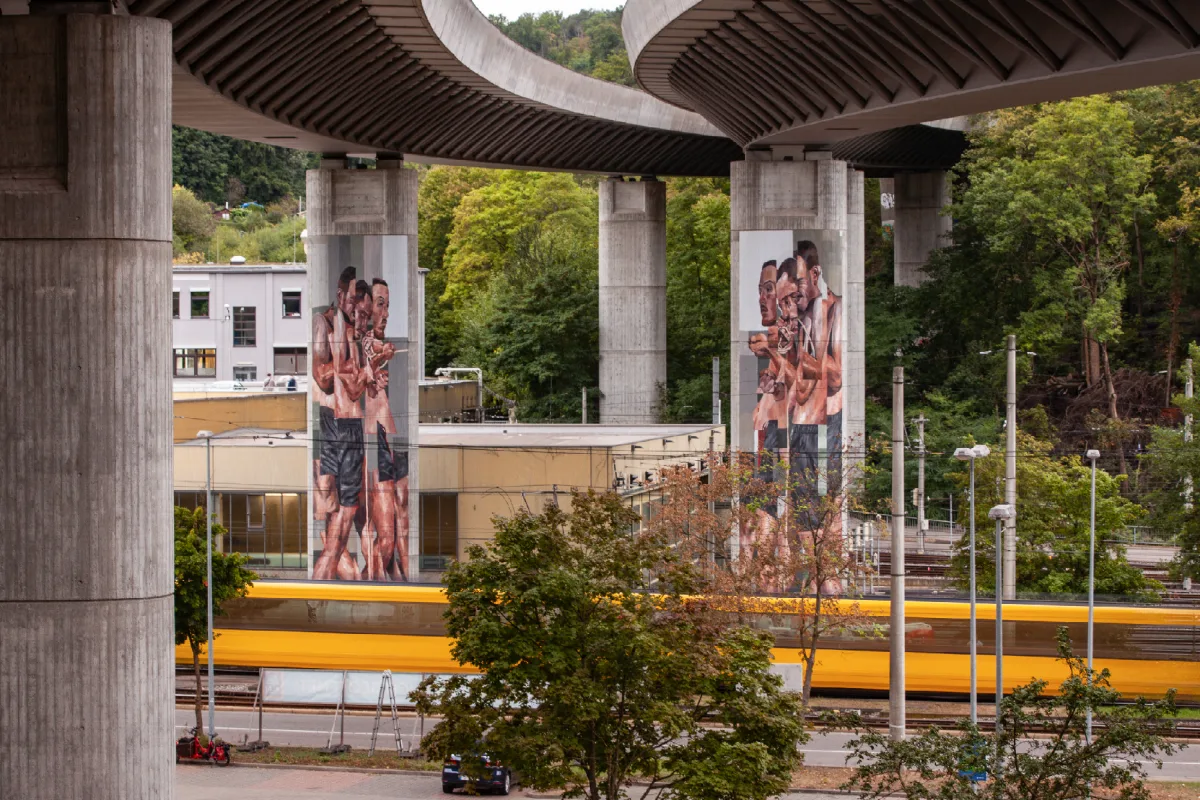
The work began with the concept of growth, in a biological and economic sense. I was interested in
the contradiction that lives inside this word: growth as something natural and alive, and at the same
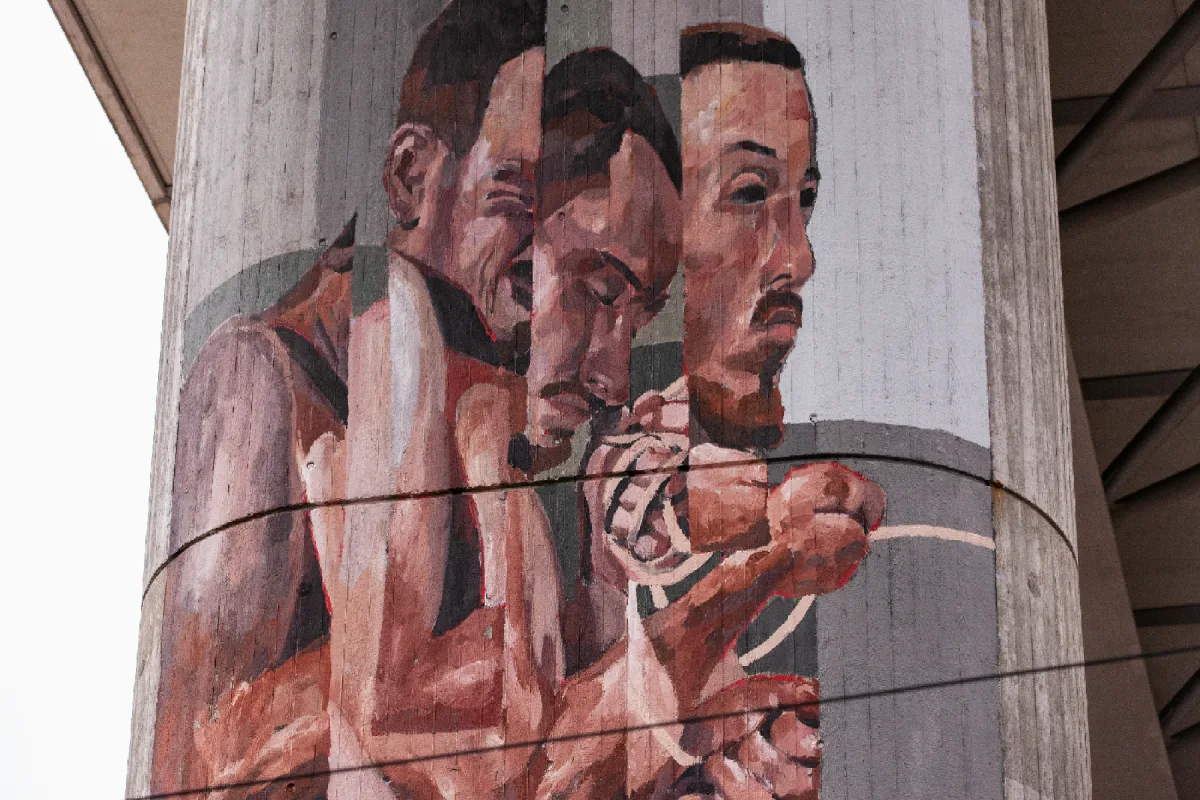
time as an economic logic that has little to do with nature. I decided to paint a mirrored motif to
make this contradiction visible. At the center was a figure in motion, deliberately blurred. It should
remain unclear in which direction the person was moving, whether forward or backward, rising or
sinking.
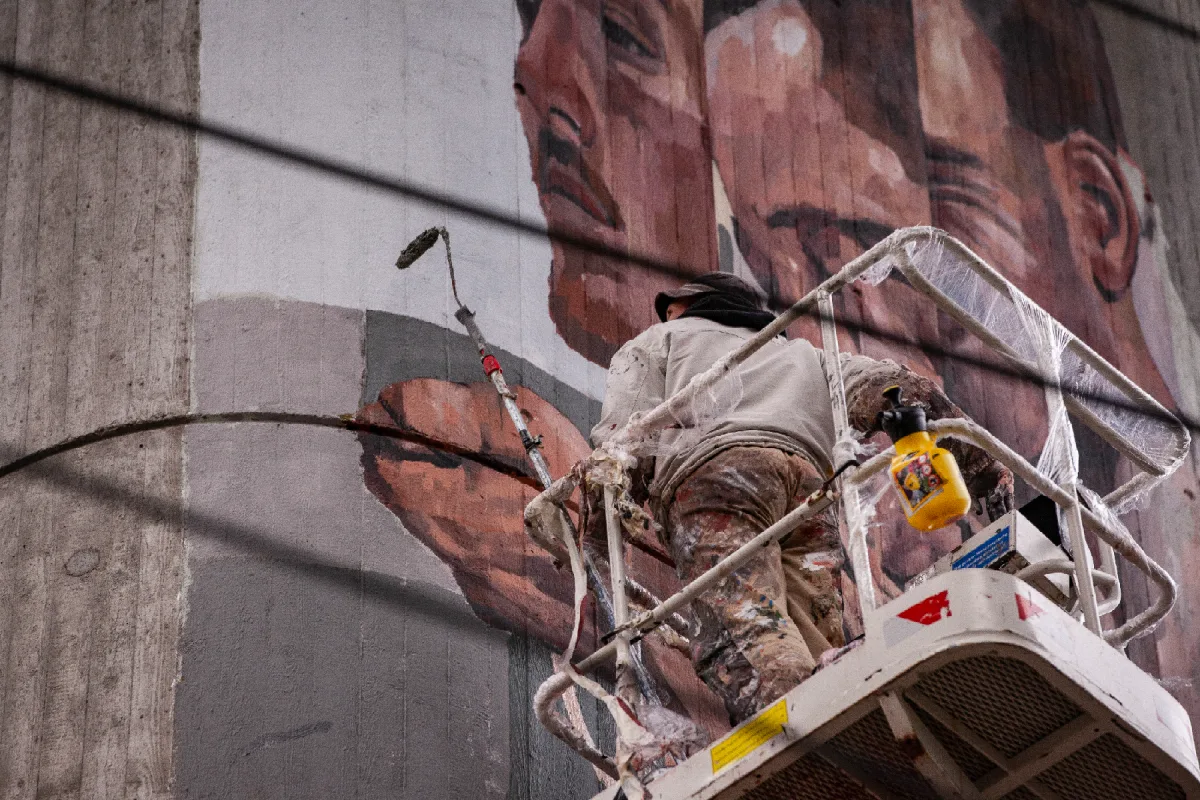
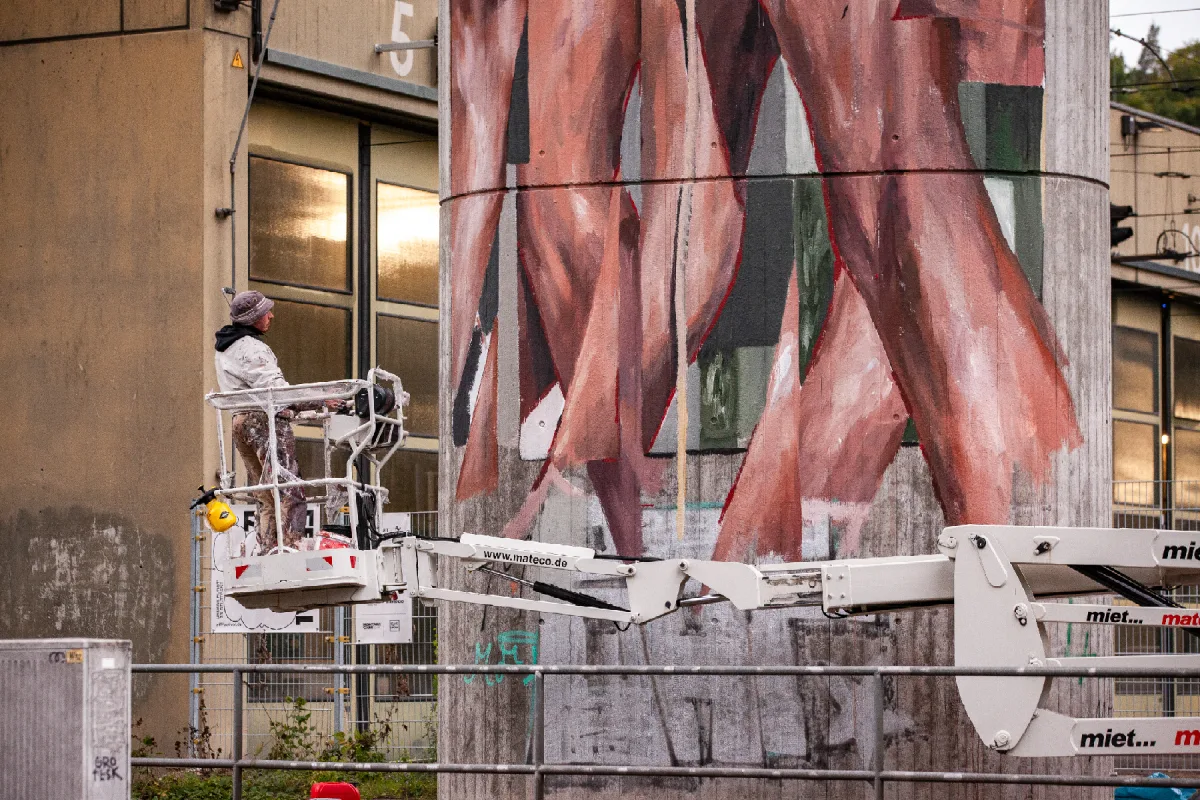
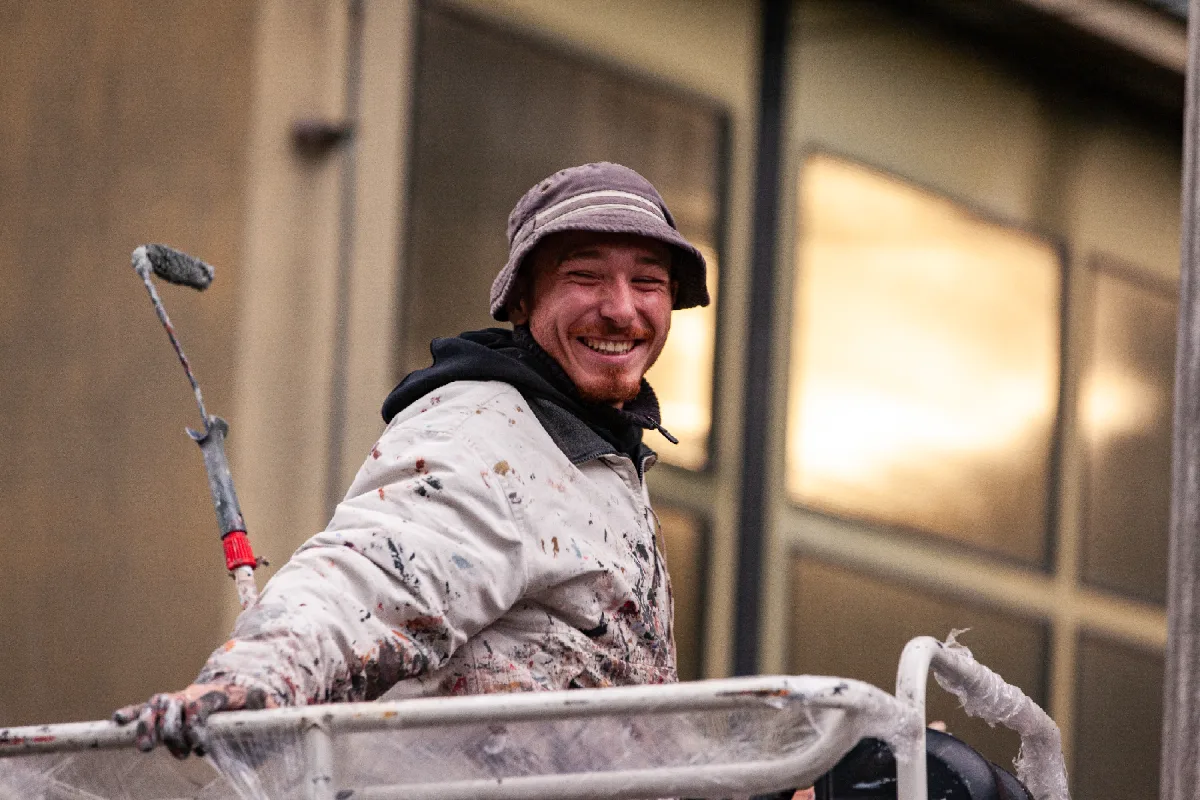
I worked on the first pillar for four days. On the last day, a fully occupied subway train stopped next
to me. The driver got out and asked whether I was painting someone jumping. He explained that
the bridges in this area were places where people had tried to end their lives.
That moment changed everything. I had been thinking about the figure as an open image, but the
history of the place gave it a meaning I had not intended. Suddenly the ambiguity felt different. I
stopped working immediately.
I went home and spent the night thinking and drawing. The place had entered the work, and I could
not ignore that. But more than that, something personal came to the surface. I decided to paint
myself, and to make the struggle with depression the subject of the mural. Not as an abstract
theme, but as something I know from my own life. The mirrored motif stayed, but it now carried a
different weight. Two figures facing each other, both myself, caught between heaviness and the
attempt to move forward.
Working in public space means working within a context that already exists, shaped by the people
who move through it, and by what has happened there. This demands a particular attentiveness, an
awareness that the work does not belong only to the artist once it enters shared space. For me it
has always been important that the work remains accessible, not in the sense of being simplified,
but in the sense of not requiring a specific cultural or academic background to be felt. Art in public
space carries a responsibility toward the people who encounter it without having chosen to. The
history of this place, and the decision to respond to it with something drawn from personal
experience, felt like the most truthful way to meet that responsibility.